Don Antonio
GRAMMAR
Grammar essentials
Review the four grammar topics for this chapter: SER, The time, Adjectives and Daily routine.
GRAMMAR
4 ESSENTIAL TOPICS
Explore the grammar guide
Use Previous and Next to review the four topics. Open any card at full size to read the details.
1 / 4 · SER
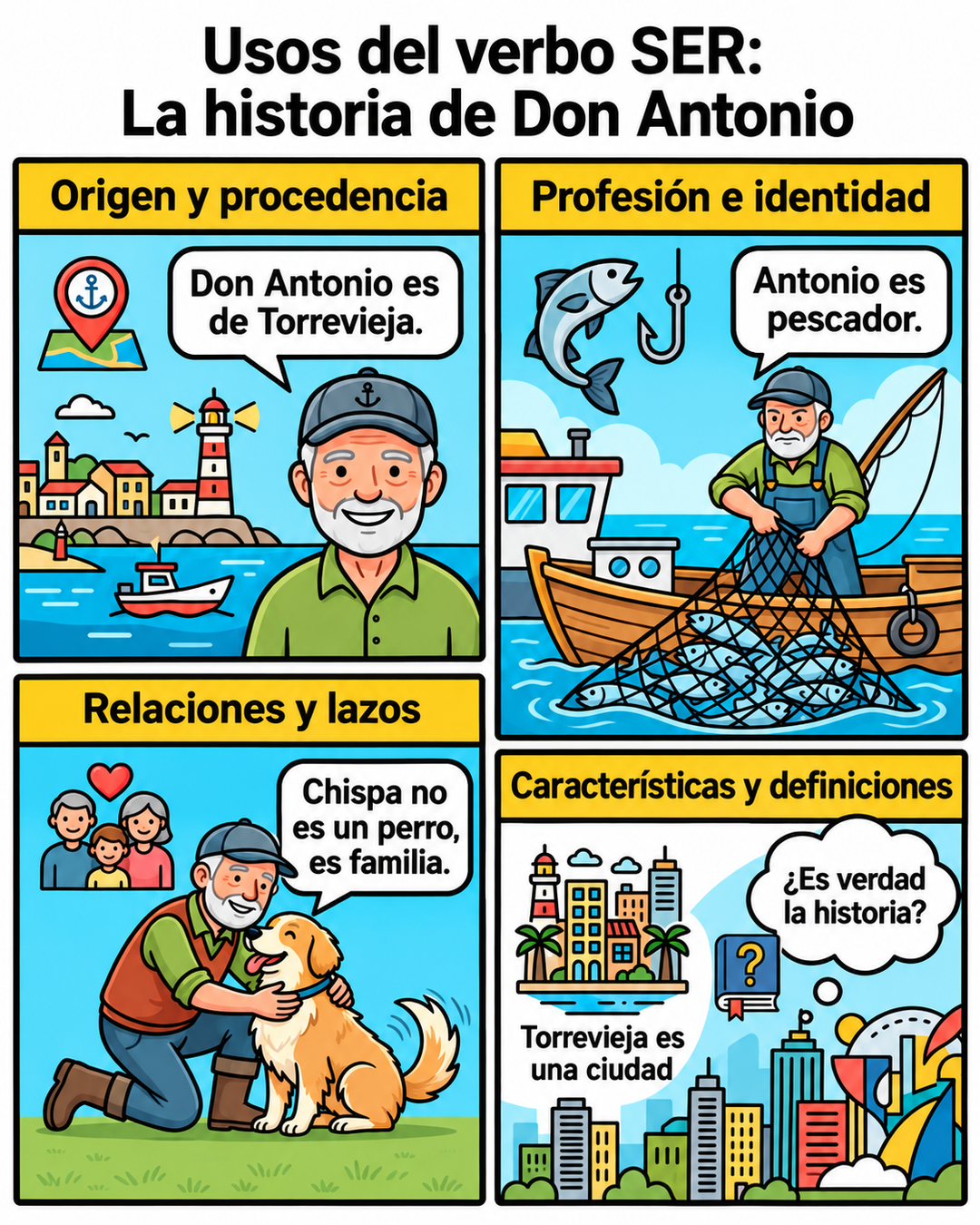
1. SER: origin, identity and classification
“Es de Torrevieja” tells us where Antonio is from. “Torrevieja es una ciudad” identifies what Torrevieja is. Use SER + de for origin and SER to identify or classify people and things. Notice: the chapter says “Antonio está jubilado” (Antonio is retired). It uses ESTAR here, not SER.
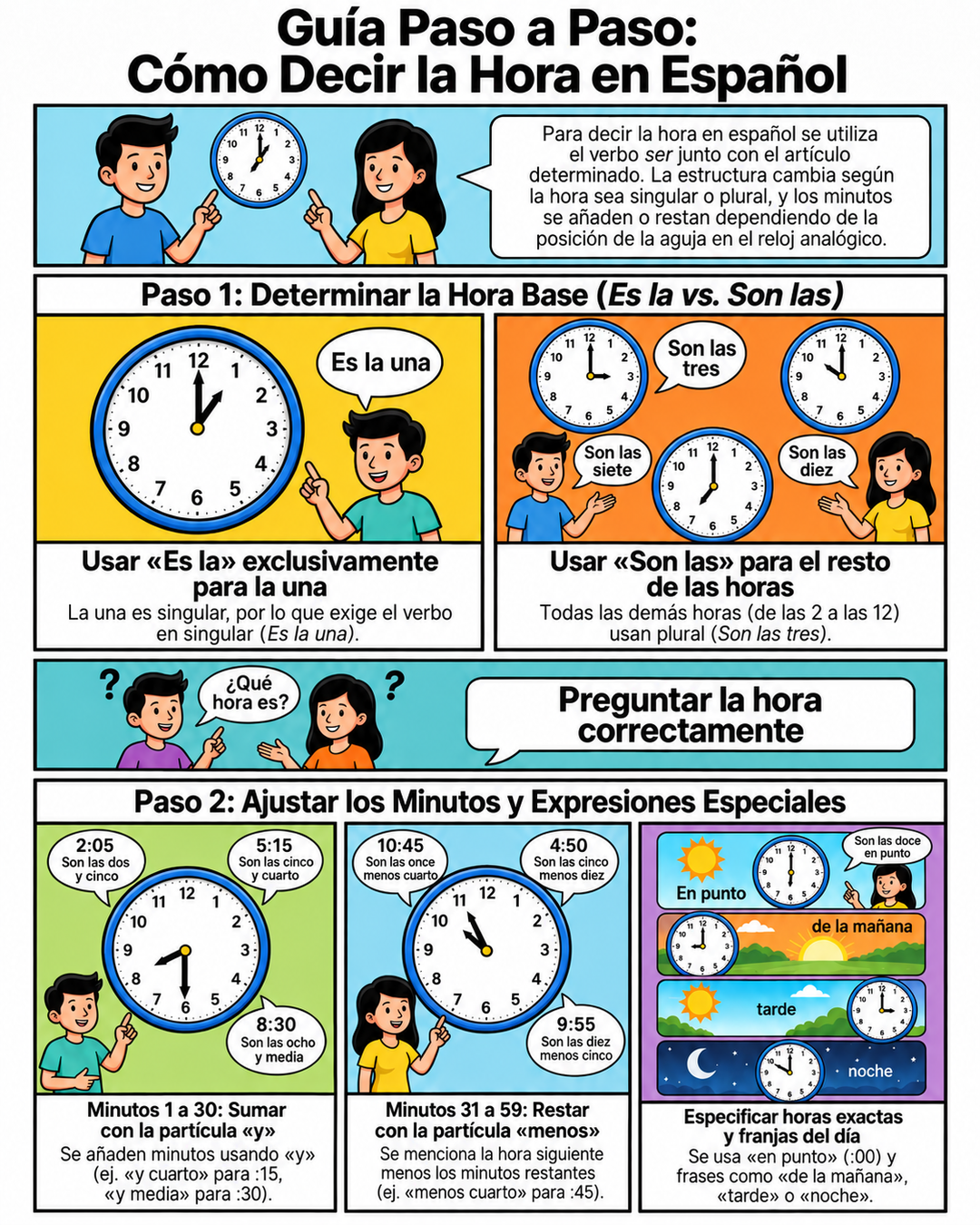
2. Telling the time
To say what time it is, use “Es la una” for one o’clock and “Son las…” for other hours. To say when something happens, use “a la una” or “a las…”. The chapter gives “A las nueve en punto” (at nine o’clock sharp) and “todos los domingos a las ocho” (every Sunday at eight). “En punto” means exactly on the hour.
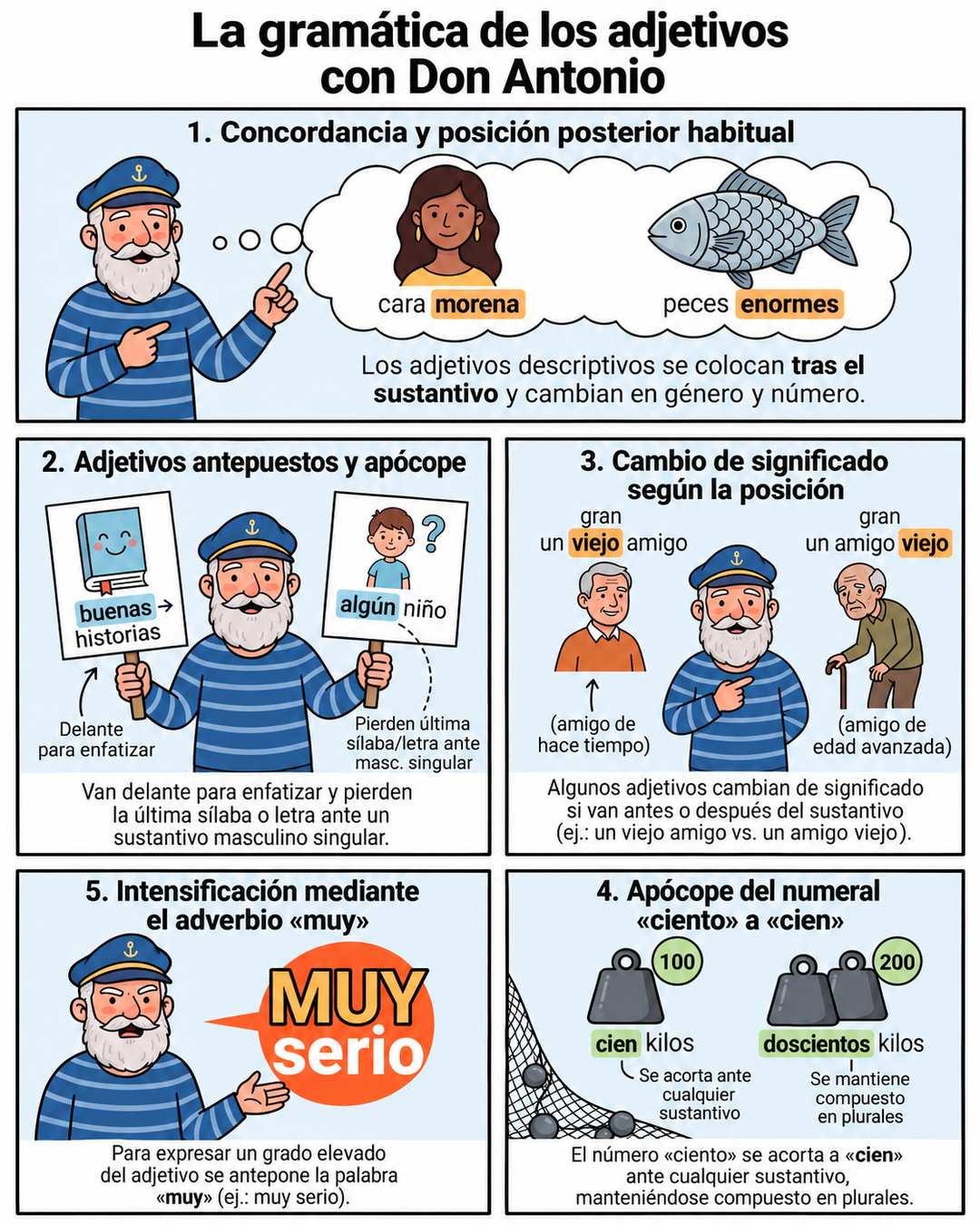
3. Adjectives: agreement and position
Adjectives agree with the noun in gender and number: “la cara morena” — the tanned face; “las manos fuertes” — the strong hands; “peces enormes” — enormous fish. Descriptive adjectives usually follow the noun. Some can come before it: “buenas historias” (good stories).
“Algún niño” shows shortening: alguno becomes algún before a masculine singular noun. “Muy serio” means very serious: muy goes before the adjective and does not change. The chapter also has “cien kilos”: ciento becomes cien directly before a noun.
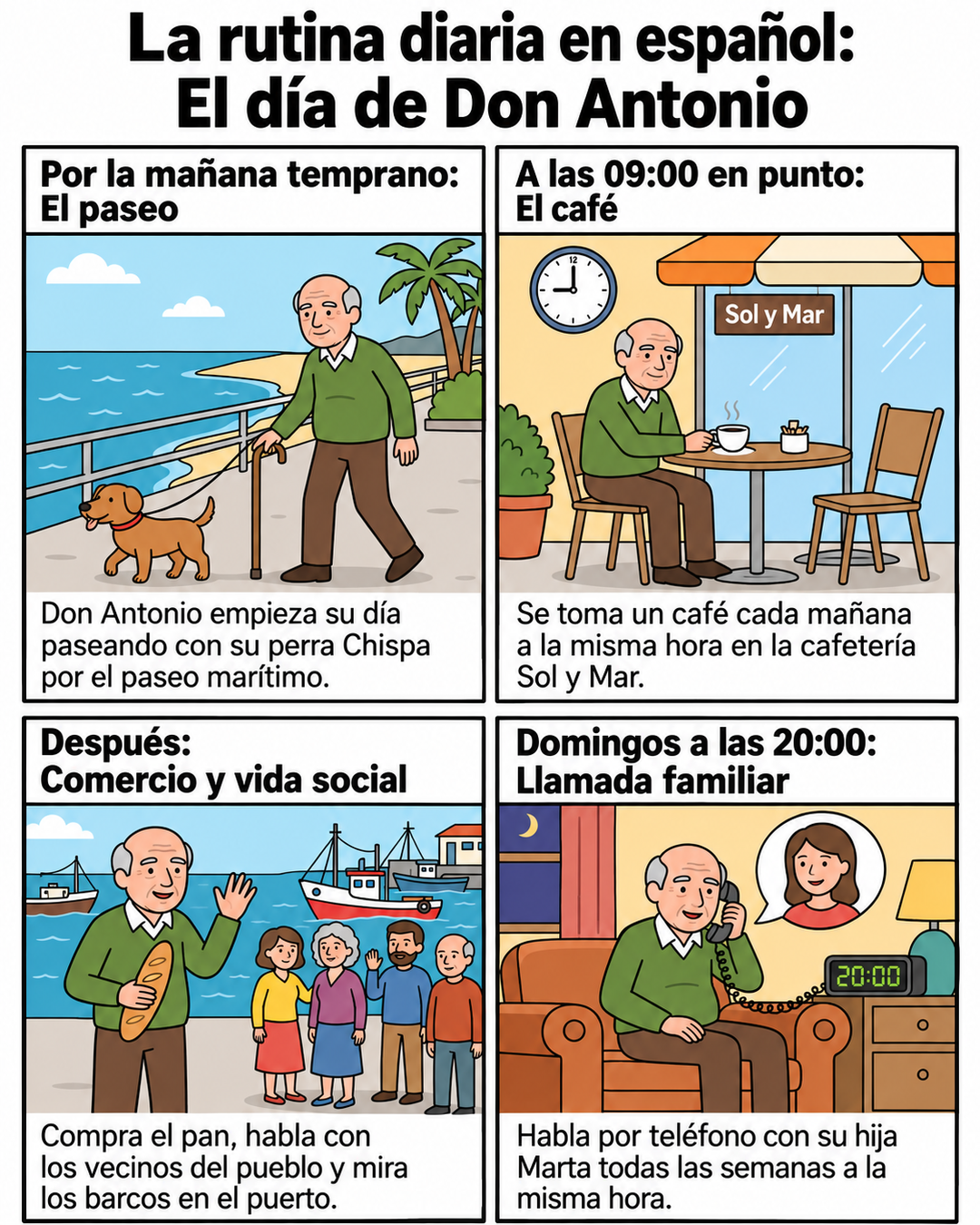
4. Daily routines: the present tense
Spanish uses the present tense for habits and repeated actions. Antonio “pasea”, “compra el pan”, “habla con los vecinos” and “mira los barcos”: he walks, buys bread, talks to neighbours and watches the boats. These regular -ar verbs end in -a with él (he). In “Hablan por teléfono”, -an marks they. “Por la mañana”, “después” and “todos los domingos” help organise the routine.
Continue learning
Continue to Build sentences, or return to Listen & Repeat to practise the patterns.